


Table of Contents
- Introduction
- Strategy: How AI Is Reshaping SMB Growth Planning
- Budgets: How AI Is Changing SMB Spending and ROI
- Operations: How AI Is Transforming Daily Work
- Practical Action Plan for SMB Leaders
- What This Means for SMB Leaders
Introduction
Artificial intelligence has moved from possibility to practice for a larger swath of small and midsize businesses. A June 2025 report from Zoom, Inc., titled How AI Is Changing the Game for Small and Midsize Businesses, finds that SMB leaders see AI improving planning, decision-making, and access to useful information.
Independent research points in the same direction. McKinsey & Company’s recent State of AI work shows that organizations’ use of AI has accelerated, and most survey respondents report using AI in at least one business function, often in several.
The U.S. Small Business Administration’s 2025 AI in Business: Small Firms Closing In spotlight, based on the Census Bureau’s Business Trends and Outlook Survey, finds that smaller firms are rapidly adopting AI and closing the gap with larger businesses.
At the same time, Boston Consulting Group reports that only about a quarter of companies have built the capabilities needed to move beyond proofs of concept and generate tangible value from AI.
So what does that mean for SMBs? AI is no longer a side experiment or a “nice to have.” It now sits inside core strategy, budget planning, and day to day operations. The question is not whether to use it, but how.
This article walks through three big areas that matter for SMB executives: strategy, budgets, and operations. It closes with a practical action plan and a final section on what all of this really means for leaders who want to move from vague interest to concrete next steps.
Strategy: How AI Is Reshaping SMB Growth Planning

Strategy is where AI changes the conversation first. That same June 2025 study of SMBs shows that leaders see AI as a way to improve decision quality, draw better insights from data, and free up time for higher value work. Those are strategic levers, not minor optimizations.
McKinsey’s State of AI research backs this up. Their surveys show that organizations are using AI in more business functions than in previous years, and that adoption has accelerated after a period of slower change. Most respondents say their organizations have adopted AI in at least one function, and on average they now use it in multiple areas such as operations, marketing, and corporate functions.
In practical terms, AI is not sitting in a lab. It shows up in regular work:
- Accounting teams using AI to help prepare reports and reconcile figures
- Marketing teams using AI to test messages, segment audiences, and draft content
- Product or engineering teams using AI to assist with analysis, documentation, or support tasks
AI has shifted from the edge of the business to the middle of everyday work.
Strategically, that matters a lot. When most organizations adopt AI in some form, AI becomes a baseline capability. If one SMB chooses not to engage, it is no longer just “being cautious.” It risks operating with slower decisions, weaker visibility into its data, and more manual work in areas where peers now move faster.
For SMB leaders, the key question becomes: where can AI help us make better decisions and move with more confidence? That might mean more accurate sales forecasts, better insight into customer behavior, or faster internal alignment around goals. AI does not replace strategy, but it can shape how quickly and clearly strategy turns into action.
Budgets: How AI Is Changing SMB Spending and ROI
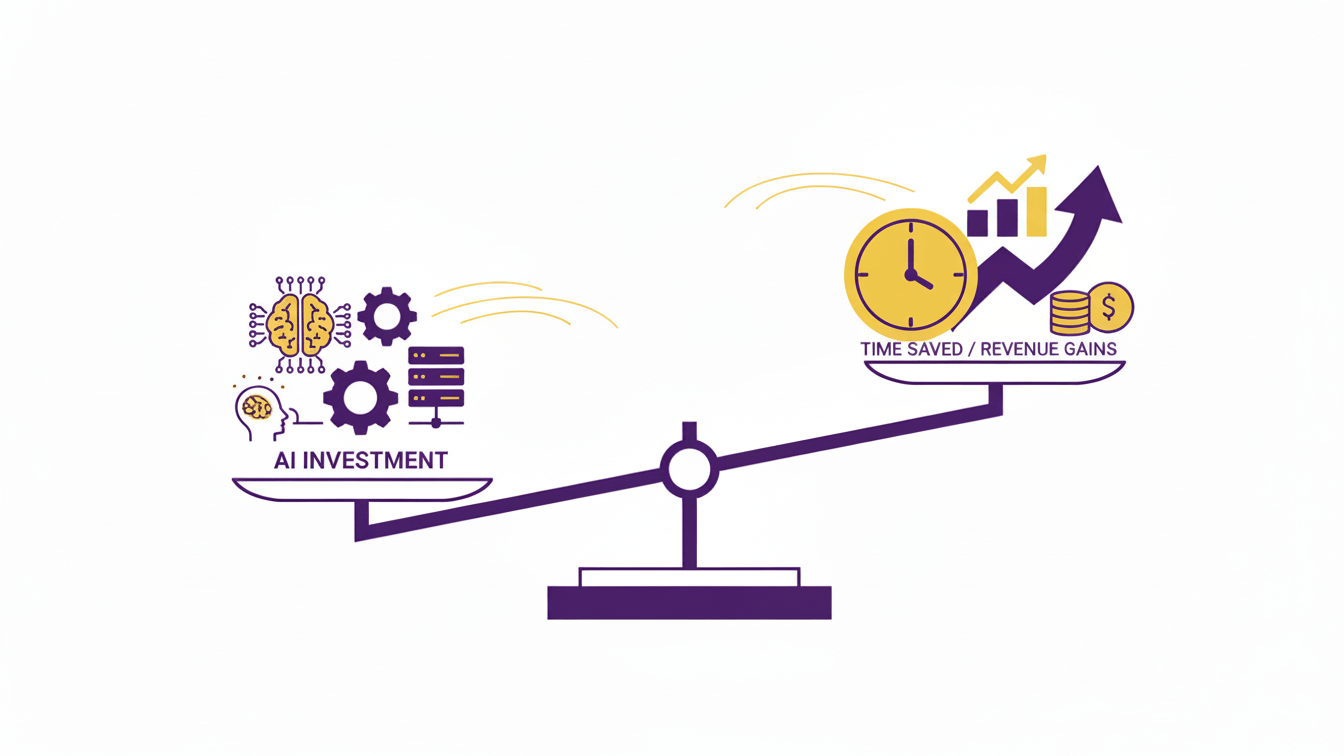
Even for resource-constrained companies, AI is earning a line in the budget. The research cited in this article finds that a strong majority of SMBs are willing to invest in AI if it clearly improves efficiency or reduces workload.
Why is that happening now? Research from McKinsey shows that organizations using generative AI report both cost reductions and revenue gains in the business units that adopt it. Savings often come from fewer manual steps in documentation, reporting, and planning. Growth often comes from faster sales cycles, more relevant outreach, and better customer engagement.
Boston Consulting Group adds nuance to the picture. In an October 2024 analysis, BCG finds that only about 26 percent of companies have developed the capabilities needed to move beyond proofs of concept and generate tangible value from AI.
Many organizations buy tools, run pilots, and then stall before they change how people actually work.
For SMBs, the lesson is to treat AI as a focused investment, not a shopping spree. A practical approach might include:
- starting with a small, fixed AI budget
- giving each department a clear owner for AI who chooses the tools, sets simple rules for use, and reports what is working
- tracking how many hours the team saves and whether the work produced is more accurate, timely, or useful. One simple method is to have team members estimate how long a task took before AI and how long it takes now, then multiply the time difference by how often they do that task each week or month
This keeps AI aligned with your normal budgeting rules and decision standards. You invest where you can see clear benefits, you give someone accountability, and you measure results in terms that finance and leadership already understand.
Operations: How AI Is Transforming Daily Work

Operations are where people feel AI in their day to day work. SMBs describe using AI to summarize meetings, pull out next steps, sift through information, support planning, and automate repetitive paperwork.
Government data shows this is not just a big-company story. The SBA’s AI in Business: Small Firms Closing In spotlight, drawing on the Census Bureau’s Business Trends and Outlook Survey, shows that many firms with fewer than 250 employees already use AI in their operations, and that AI use has been rising since 2023.
Even firms with fewer than 100 employees report AI use. These are the firms that often have the tightest resources, yet they are finding ways to put AI to work.
In practical terms, AI is changing operations in a few key ways:
Less time on low-value tasks.
AI helps with things like transcribing conversations, creating first drafts of emails and documents, or pulling out key points from dense material. People spend more time on judgment and less on mechanics.
Faster access to useful insight.
Instead of digging through long email threads, reports, or spreadsheets, staff can ask AI tools to surface key trends, compare periods, or highlight risks. Planning and troubleshooting become quicker and more informed.
More output without more hiring.
When routine tasks become lighter, each person can handle more. For small teams, this can be the difference between staying flat and being able to grow without immediately adding headcount.
As more small firms adopt AI, expectations rise across the board. Customers notice quicker responses and more tailored communication. Employees begin to expect tools that make their work smoother. SMBs that delay AI adoption may still function, but they will feel more pressure as these new expectations become the norm.
Practical Action Plan for SMB Leaders
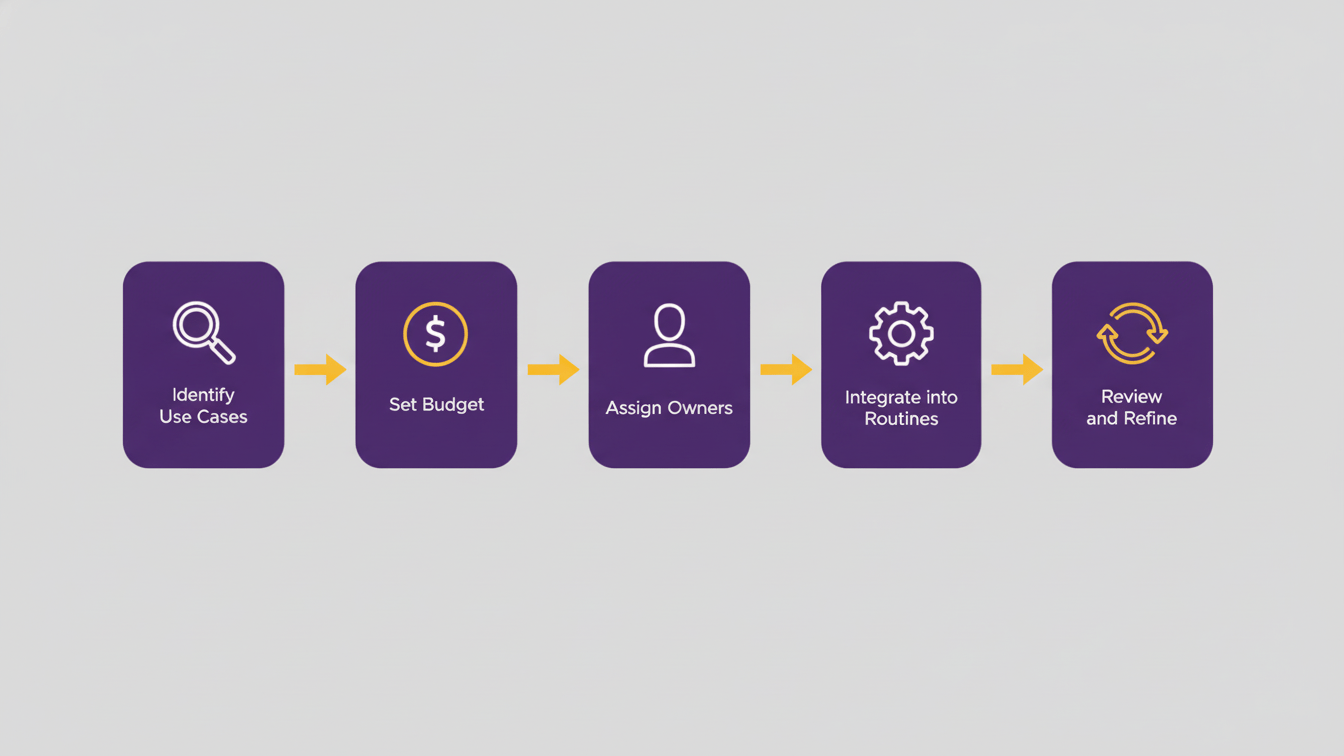
You do not need a giant transformation program to start using AI well. You do need a clear plan and some simple guardrails. Here is a straightforward path you can adapt to your own organization.
1. Identify a few high-impact use cases
Start by asking a basic question: “Where do we lose the most time?” Common answers include:
- scheduling and follow-up work
- routine customer communication
- recurring reports and dashboards
- internal documentation and knowledge lookups
Pick one or two areas where a lighter workload or faster turnaround would be obvious to the team.
2. Set a modest, stable AI budget
Decide how much you can comfortably spend each month on AI tools. Treat that amount as part of your core operating stack, not as a one-off experiment. This keeps expectations realistic and avoids budget shocks.
Review AI spending in terms of:
- time saved
- fewer manual steps
- better or more timely decisions
If the numbers do not make sense, adjust quickly.
3. Give AI a clear owner in each department
In each function that will use AI, simply name a point person. That person does not need to be a data scientist. Their job is to:
- choose and test tools that fit the team’s work
- document a few “approved” use cases
- collect feedback on what is helping and what is not
This builds local ownership and prevents AI from feeling like an imposed, generic initiative.
4. Make AI part of daily routines
Encourage teams to use AI for everyday tasks such as:
- summarizing calls and meetings
- drafting emails, proposals, and internal notes
- doing first-pass analysis of data
- creating outlines, plans, or checklists
Make it clear that people still own the decisions. AI is a helper, not the final authority.
5. Set simple guidelines so people know the boundaries
Publish a short, plain-language guide that covers:
- when AI is appropriate
- what kind of information should never go into AI tools
- how people should review the output before using it
This builds trust and reduces hesitation. People know what is expected and where the lines are.
6. Review progress every quarter
On a regular cadence, ask a few straightforward questions:
- What tasks did AI make faster or easier?
- Where did it not help or create extra work?
- What did we learn about how our teams want to use it?
- What should we try next, and what should we stop?
Use the answers to refine tools, training, and focus. The goal is steady progress, not perfection.
What This Means for SMB Leaders
Across different research sources, the story is consistent. AI has become part of the day-to-day operations for modern businesses.
The June 2025 Zoom report shows that SMBs see real value in AI for planning, decision-making, and everyday productivity. McKinsey’s State of AI work shows that organizations now use AI across more business functions than before, and that adoption has accelerated after years of slower change.
The SBA and Census Bureau show that small firms are closing the adoption gap instead of being left behind.
Boston Consulting Group reminds us that value does not come from tools alone. It comes from the capabilities and habits built around them.
For SMB executives, the opportunity is clear. AI can help teams work smarter, not just harder. It can free time, improve decisions, and create room for growth. The challenge is to approach it with intention. Start small, focus on real problems, give people ownership, and learn as you go.
The companies that follow that path will not just “have AI.” They will use it in a way that genuinely changes how their business performs.